Overview
Project Type
Design Research
Timeline
10 weeks
Role
Lead Researcher
Abstract
This collaborative mixed-methods research project explores the evolving relationship between photographers and their tools through surveys, interviews, and sensory cue analysis. By utilizing rigorous synthesis methods like affinity mapping and coding sheets, the team developed a comprehensive framework that defines the emotional and functional requirements of a modern, "ideal" camera. The resulting case study focuses on direction toward authentic, tactile technology that serves as a vessel for community, creativity, and personal identity rather than just another digital feature. This project was created with the methods of the Lextant framework for user experience research.
The Research Framework
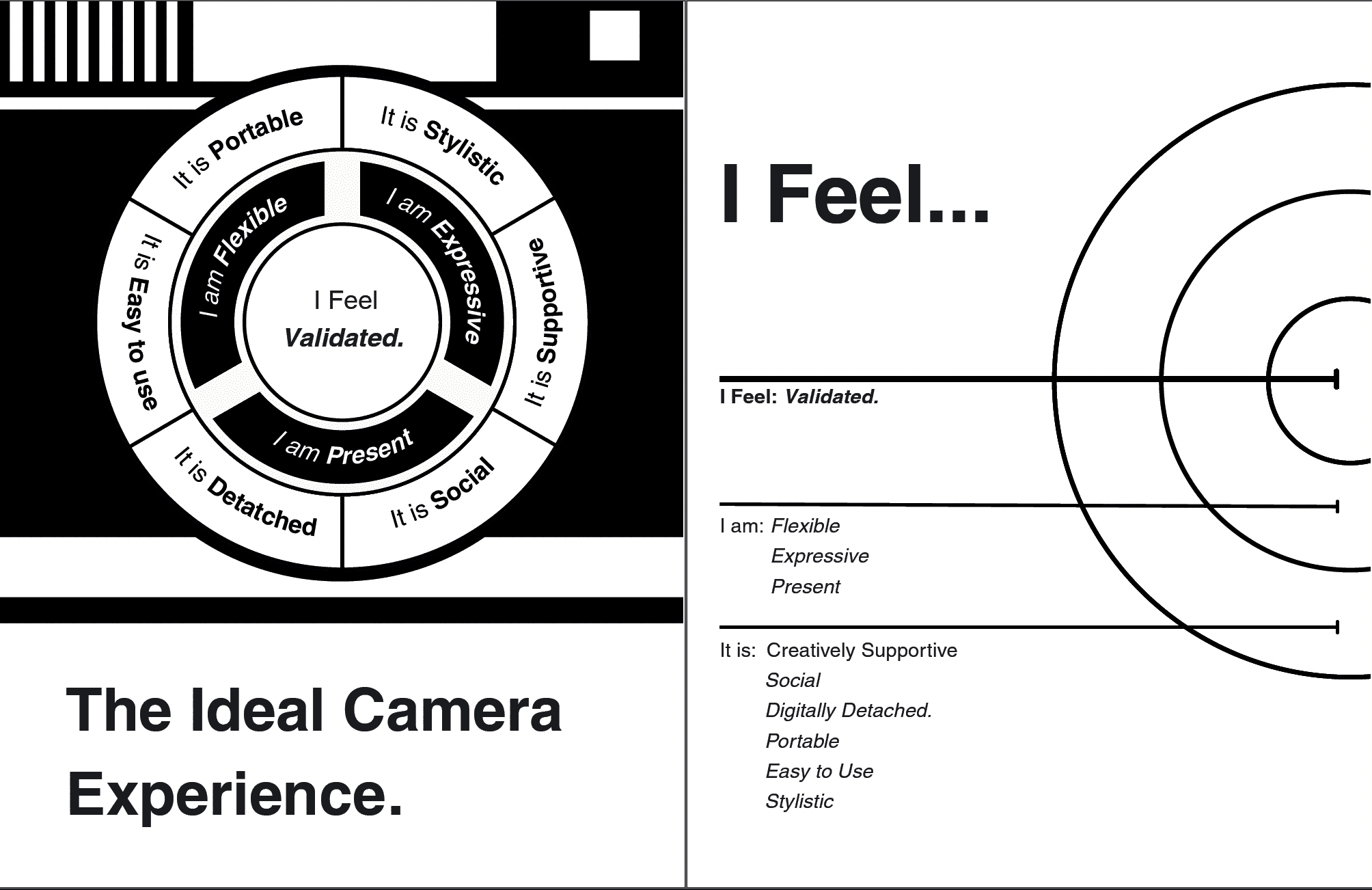
The project is built upon a multi-layered framework that categorizes the user experience into internal feelings, personal attributes, and external product qualities. This structure addresses the "Ideal Camera Experience" by examining how a device makes a user feel (Validated), who it allows them to be (Flexible, Expressive, Present), and what the tool itself must embody (Social, Portable, Easy to Use). This holistic approach ensures that design opportunities are grounded in both psychological needs and practical functionality.
Psychological Validation & Presence
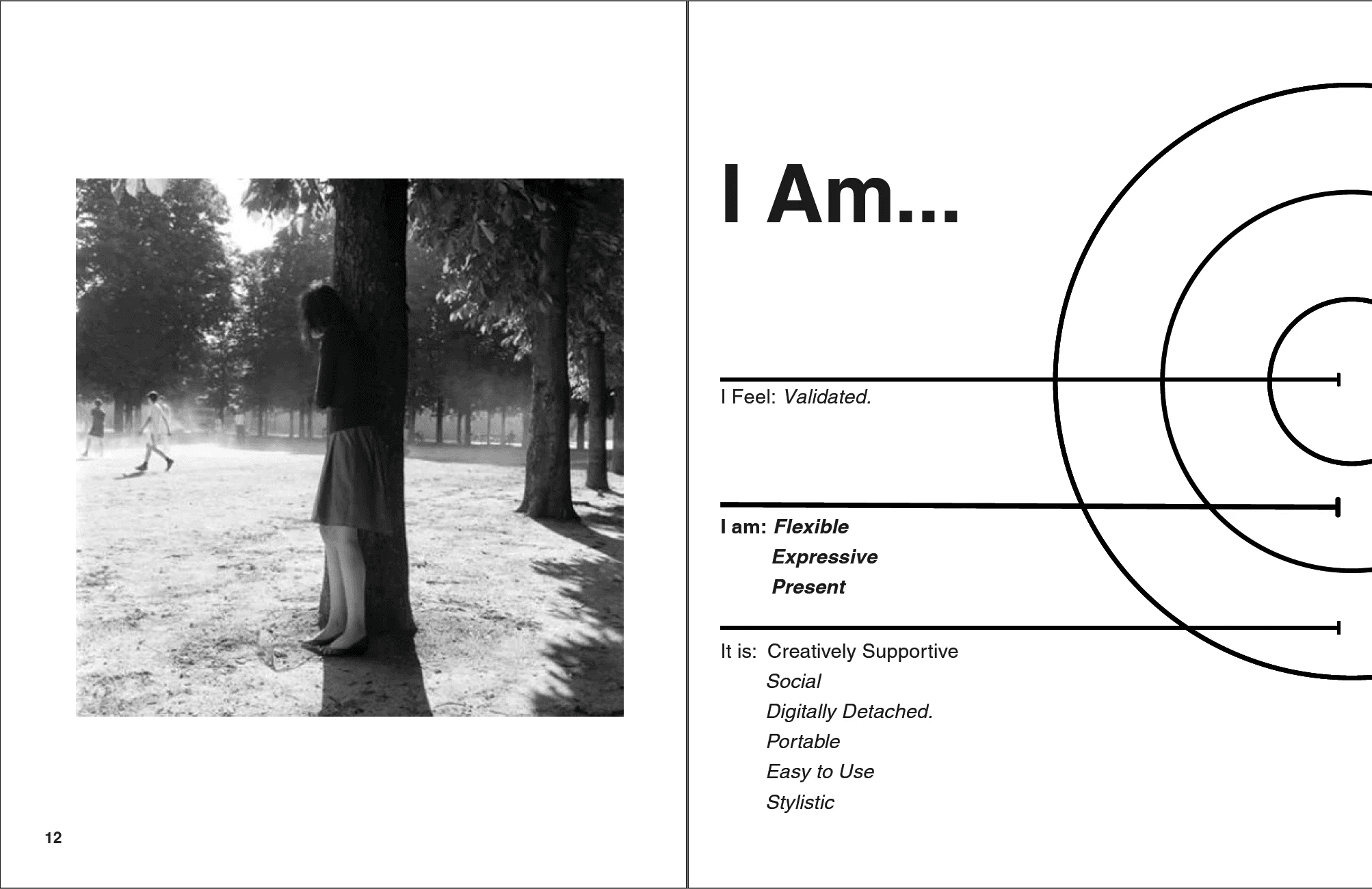
A primary finding of our research is that a camera must first serve as a tool for validation, faithfully translating a photographer’s vision into an image to affirm their skill and perspective. Beyond mere capture, the ideal experience acts as a "meditation tool," grounding the individual in the present moment through an immediate feedback loop. This state of being "Present" is reinforced by digital detachment, pulling the photographer away from screens and notifications to foster a mindful ritual of observation.
Creative Support & Expression
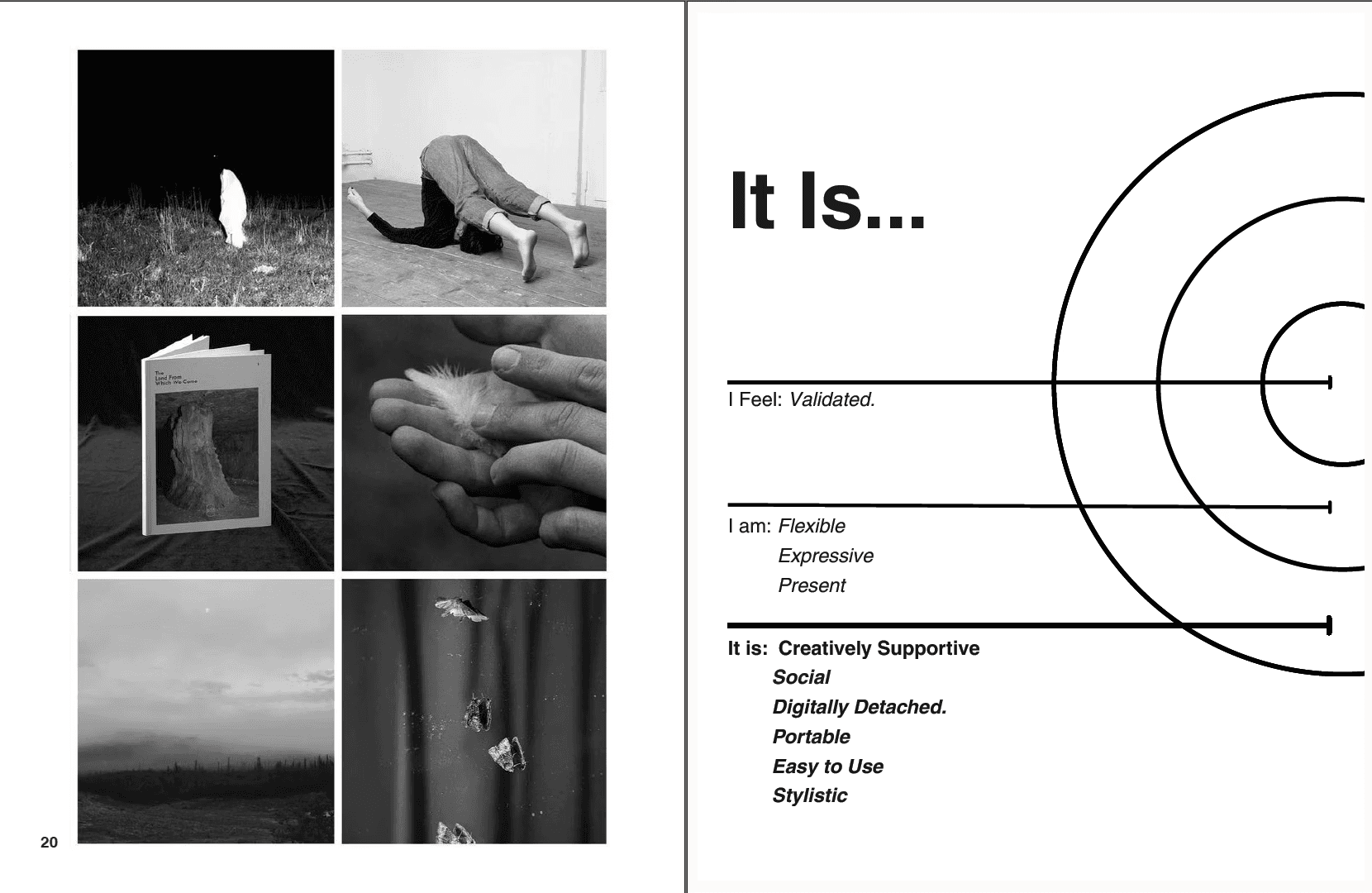
The research identifies the camera as a "collaborator" in the creative process, one that adapts fluidly to an artist’s instinct and experimentation. To be truly expressive, the tool must translate internal thoughts into a visual narrative, allowing users to share their unique response to the world. Whether through interchangeable lenses or ergonomic carrying cases, practical flexibility is converted into artistic freedom, empowering ideas to flow effortlessly from imagination to image.
Functional & Social Attributes
The "ideal" tool is defined by its ability to be social and stylistic while remaining easy to use. Users expressed a need for an object that delivers a distinct aesthetic straight out of the lens, avoiding tedious editing to capture nostalgia authentically. Thoughtful, intuitive design allows the interface to disappear into the background, ensuring the union between tool and vision is seamless and natural in the hands.
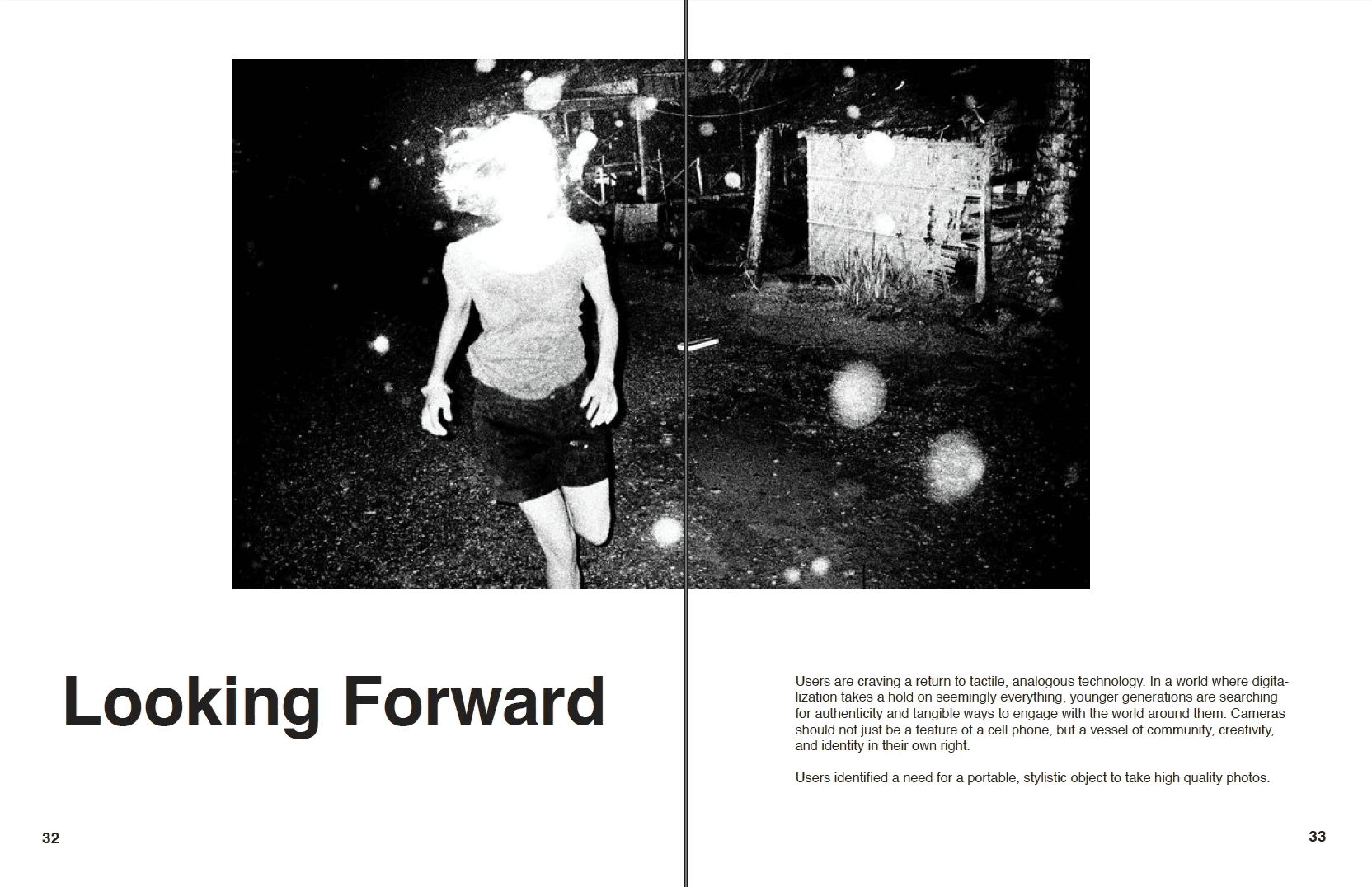
Looking Forward: The Analogous Return
Our concluding insights reveal a growing craving for a return to tactile, analogous technology among younger generations. In a world dominated by pervasive digitalization, users are searching for tangible ways to engage with their surroundings and build communities. The final project identifies a clear design opportunity for portable, stylistic objects that provide high-quality photography while restoring authenticity to the act of capturing life’s moments.