Overview
Project Type
Interface Design
Timeline
10 weeks
Role
Information Architect Lead
Abstract
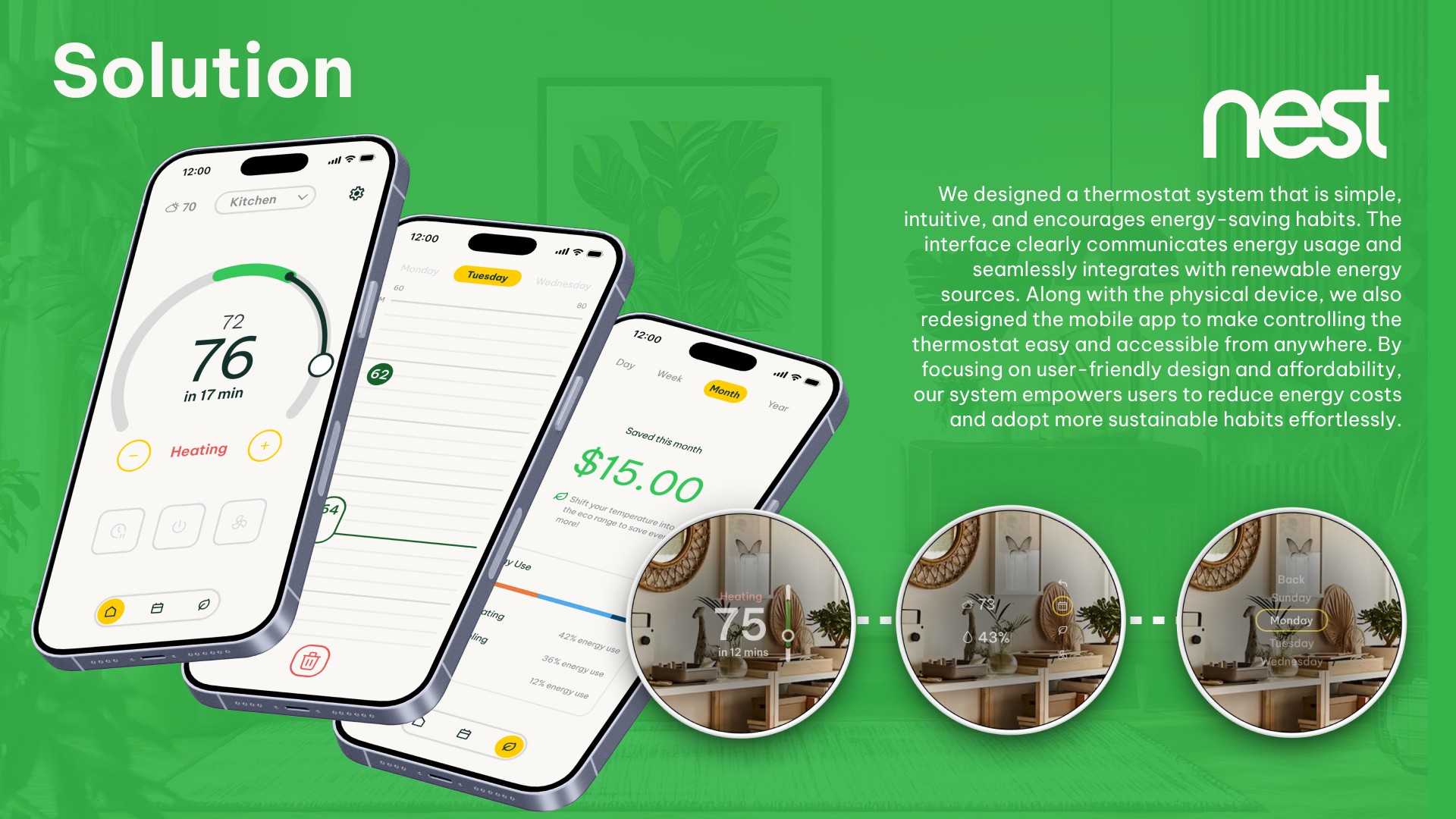
We redesigned the Google Nest Thermostat to reflect a Green & Affordable approach. Our goal was to create an easy-to-use, energy-efficient thermostat that works smoothly with renewable energy sources. During the project, we carried out research, brainstormed ideas, and tested the design with users.
The Design Challenge
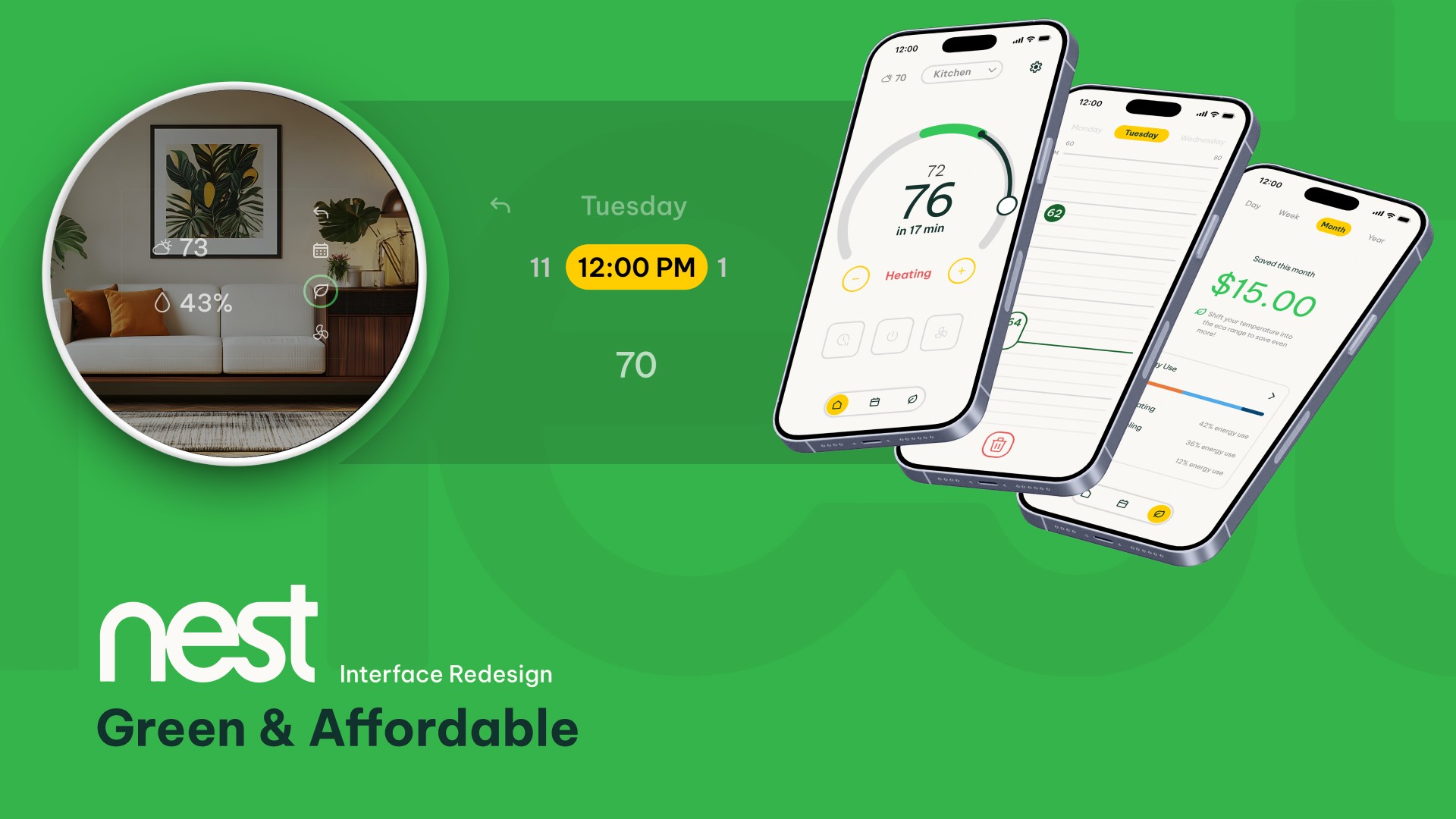
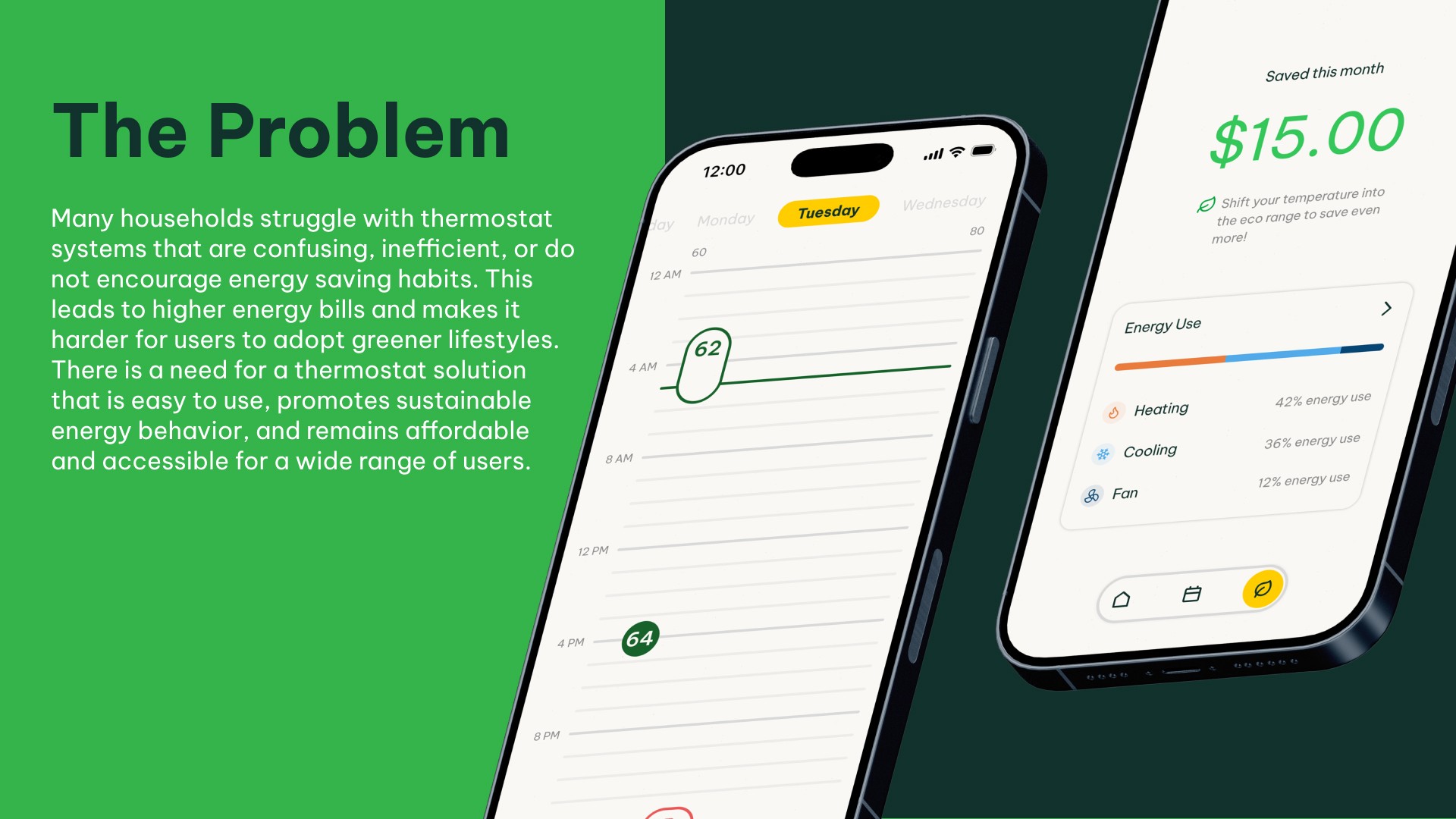
The objective was to redesign a thermostat and app that communicated "green" and "affordable" without resorting to visual clichés. Our research defined "green" as a state of calm and responsibility, while "affordable" was reframed as dignity and approachability rather than "cheapness". The goal was to move beyond the physical device to create a design system that feels respectful and fits seamlessly into a user's daily life.
Visual Research & Mood Boards
We began by analyzing how these values are traditionally represented in visual language, examining color, shape, and form. Our mood board analysis for "Green" highlighted rounded shapes, soft natural tones, and calming space, while "Affordable" favored monochromatic palettes, high readability, and simple geometric layouts. Strikingly, the overlap between the two was simplicity and clarity; both favor soft forms and palettes that welcome the user rather than overwhelming them.
Defining the Visual Voice
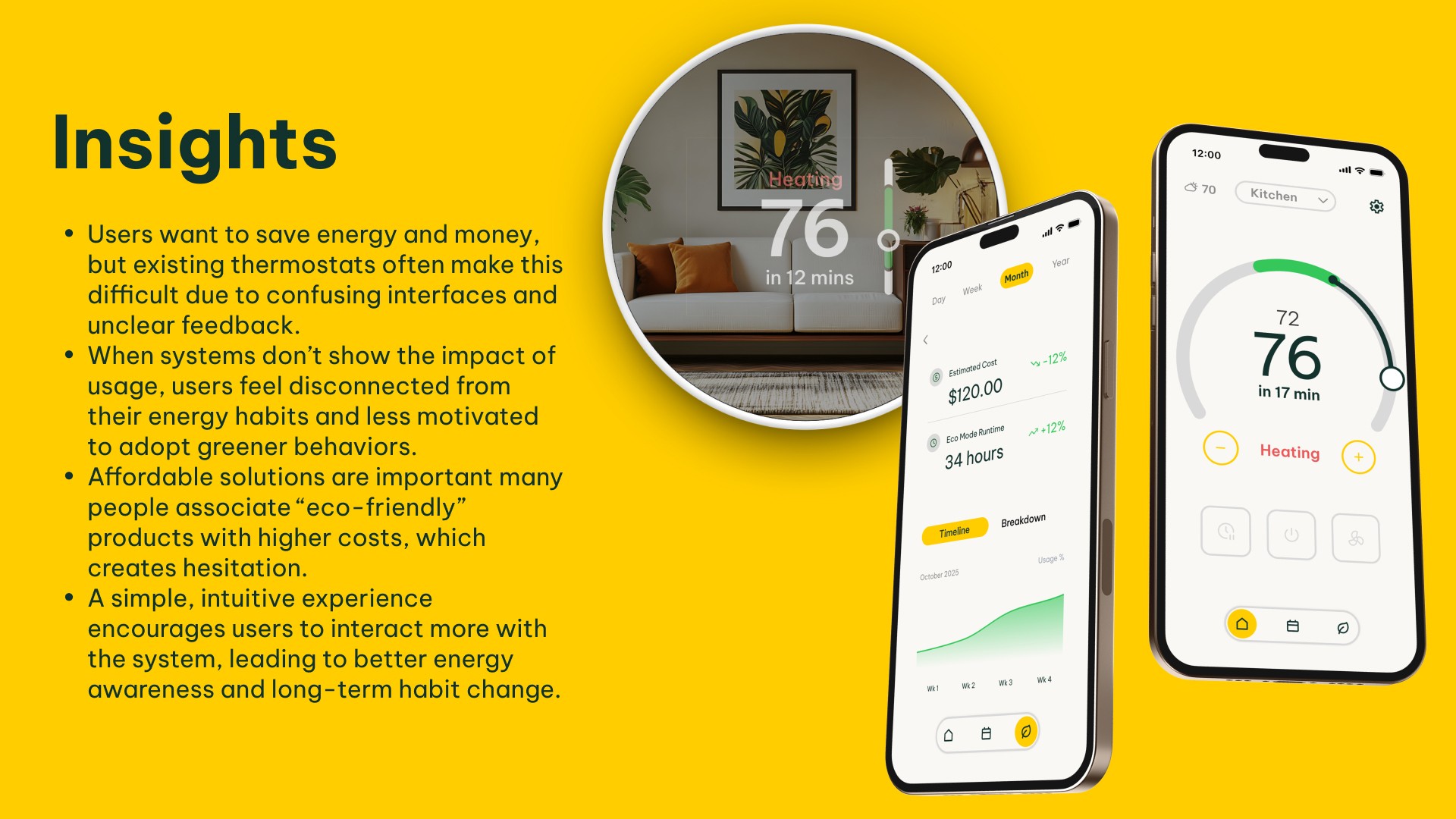
From our research, a unified design direction emerged: merging the natural softness of green with the clean clarity of affordability. We committed to a light, airy color palette where green serves as a meaningful accent rather than the dominant voice. This visual identity relied on rounded edges and geometric shapes to maintain a warm, human tone, supported by high-readability typography and semi-flat vector illustrations to reduce visual noise.
Iterative Development & Wireflows
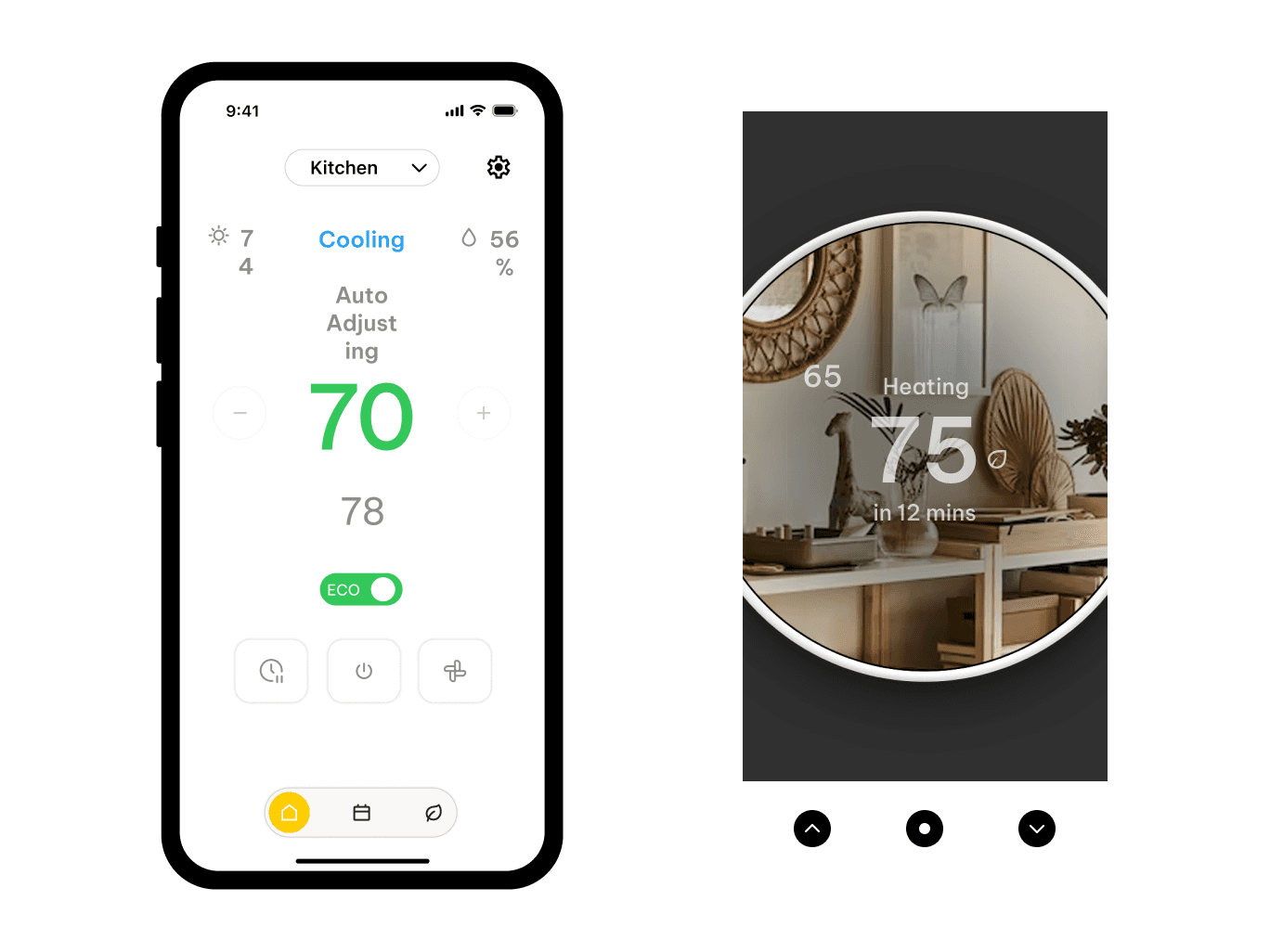
The redesign process involved five rounds of visual ideation, moving from loose sketches to finalized task flows. We utilized wireflows to map out the most logical interactions, ensuring the system felt intuitive and precise. For the physical thermostat, sharp edges were replaced with smooth, rounded geometry, while the digital interface was stripped of clutter to show only essential information, allowing the device to feel like a part of the home.
The Final Integrated Experience
The final product is a cohesive system where the thermostat and app share a consistent shape language and emotional tone. Sustainability is achieved through natural ease and a calm visual tone, while affordability is communicated through friendly, intuitive interactions and clear feedback. The result is a warm, approachable environment that guides the user gently, removing the friction often associated with smart home energy management.